• Wb-Type Rubber Block Coupling
  • Wb-Type Rubber Block Coupling
Wb-Type Rubber Block Coupling
+

Wb-Type Rubber Block Coupling

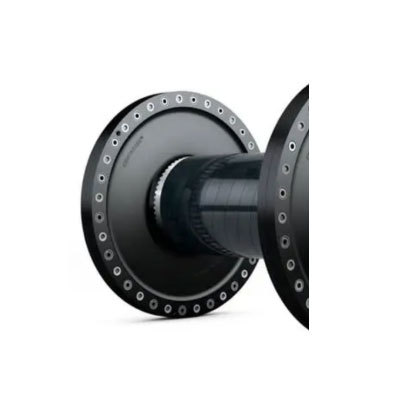
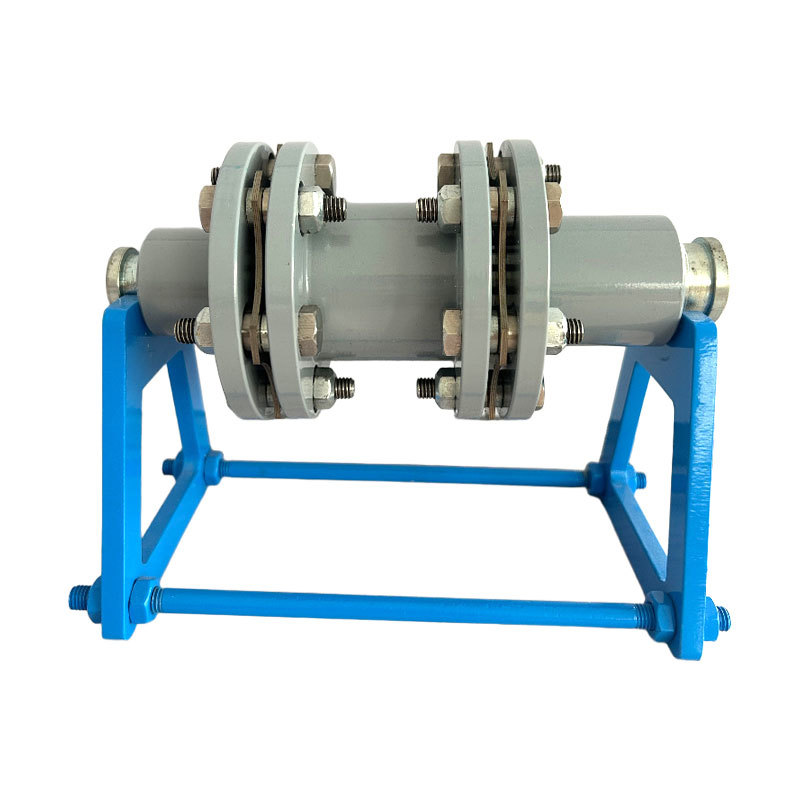
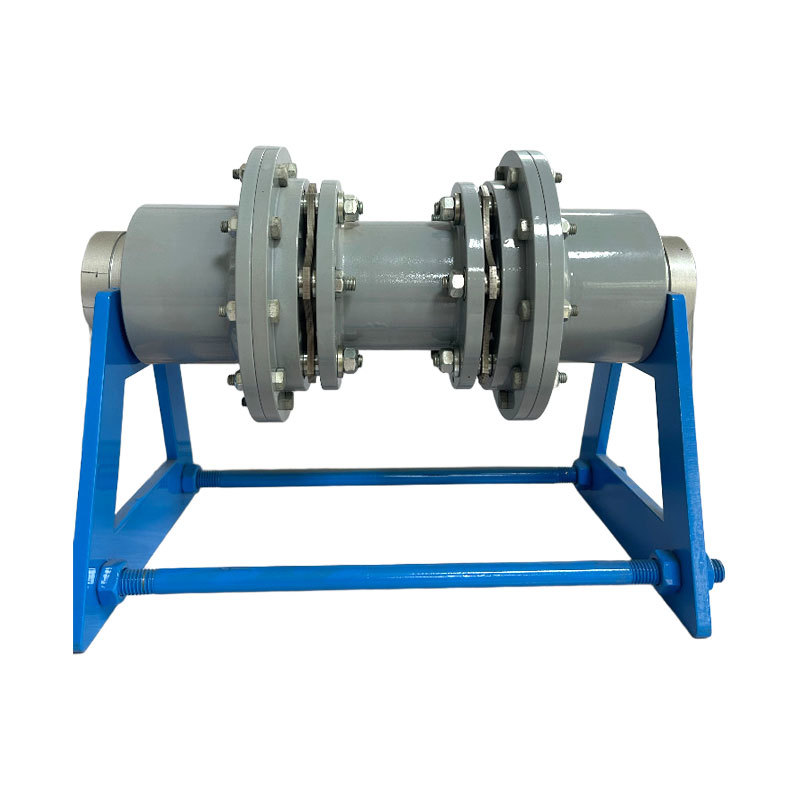
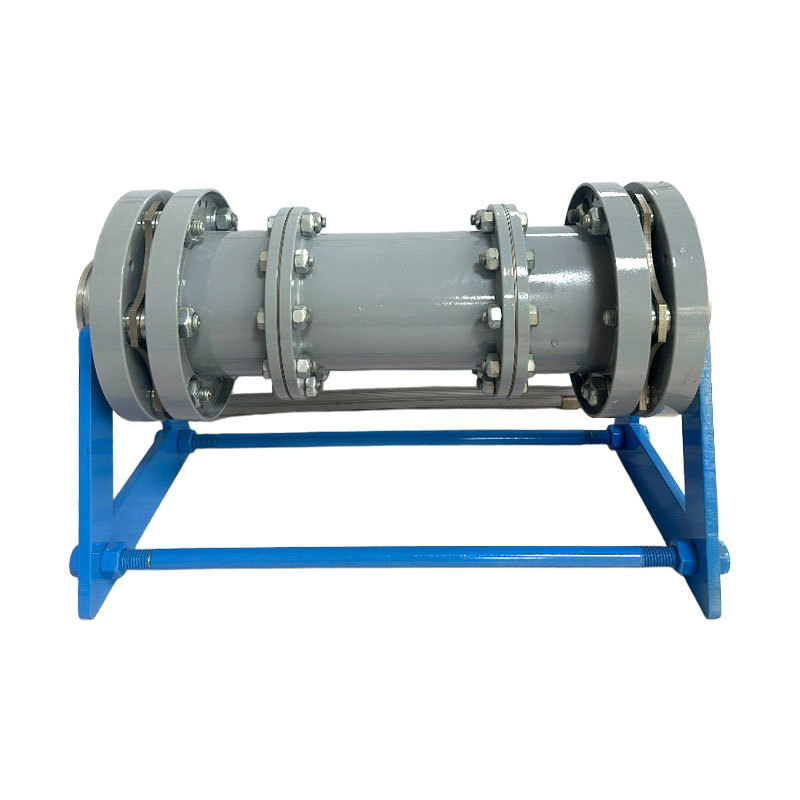
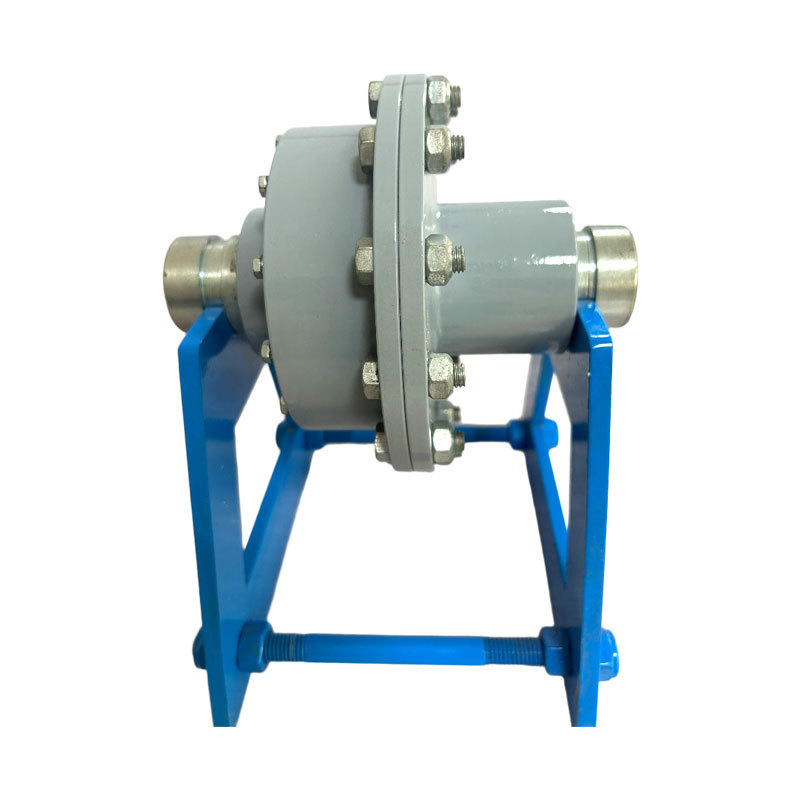
The elastomeric coupling can transmit high torque and absorb rotational shocks in the unit, requires no lubrication, is easy to install and disassemble, and performs reliably even in harsh conditions such as humidity, sand, high temperatures, and other challenging environments—while demanding minimal maintenance and helping extend the lifespan of the equipment.

Detailed introduction

Product Features
The mechanical rubber block coupling can transmit high torque and absorb rotational shocks in the unit, requiring no lubrication, while being easy to install and disassemble. It performs reliably even in harsh environments such as wet, sandy, high-temperature conditions—and other challenging settings—while demanding minimal maintenance and helping extend the lifespan of the equipment.
 
Application scenarios
Suitable for units with large moments of inertia, significant torque fluctuations, operational shocks, and reciprocating motions.
 
Wb-Type Rubber Block Coupling
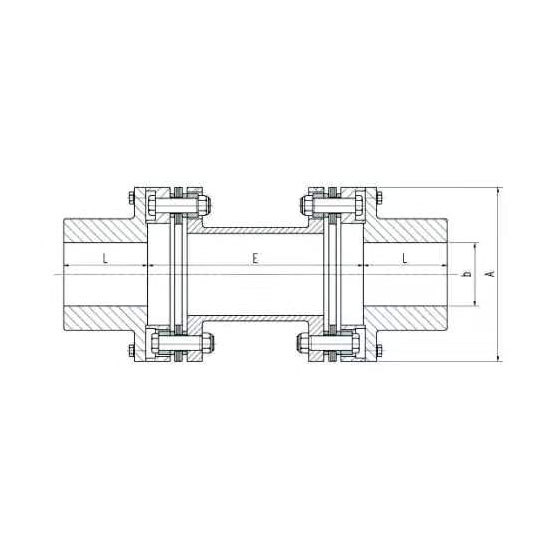
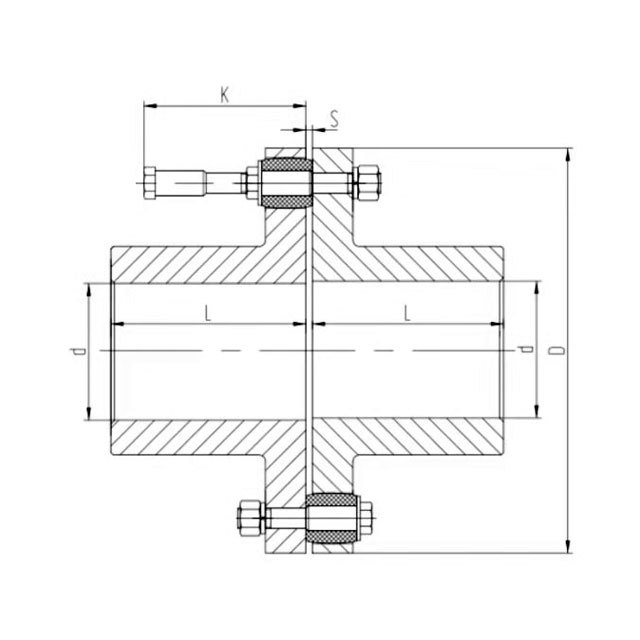
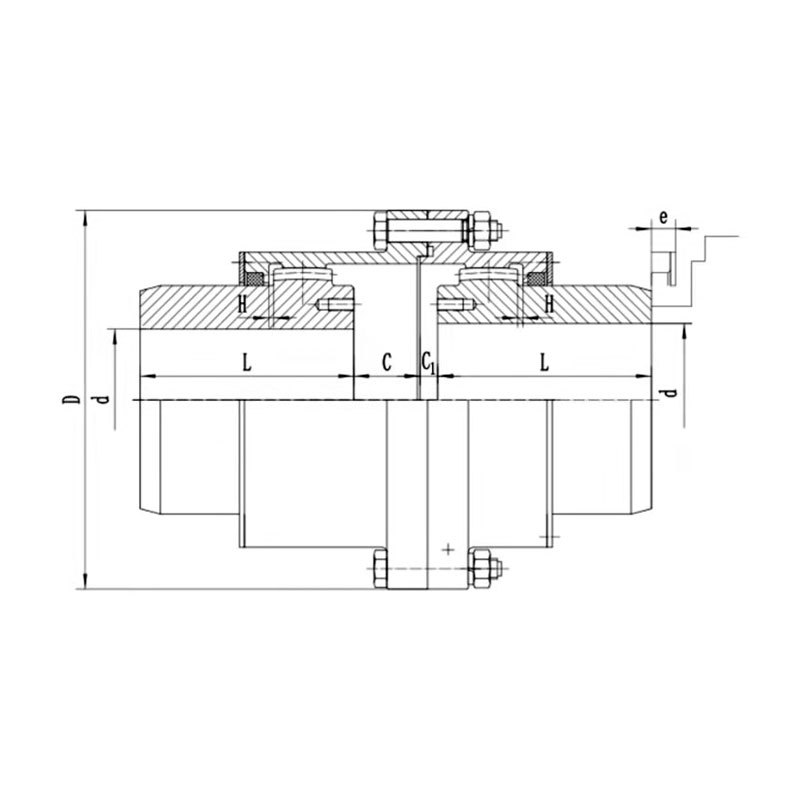
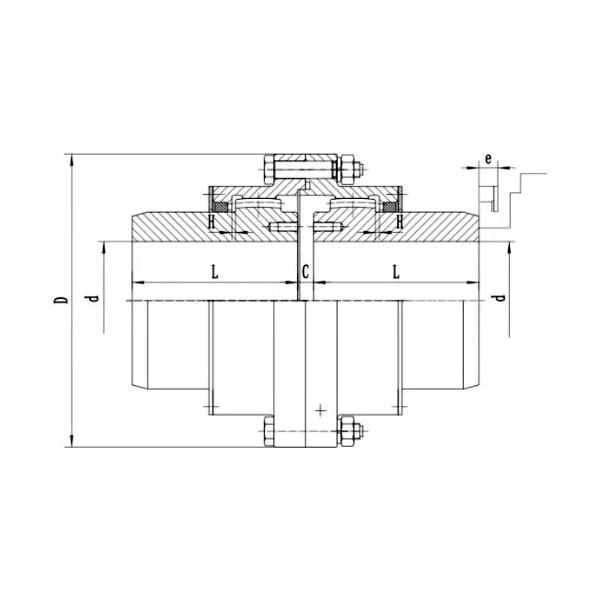
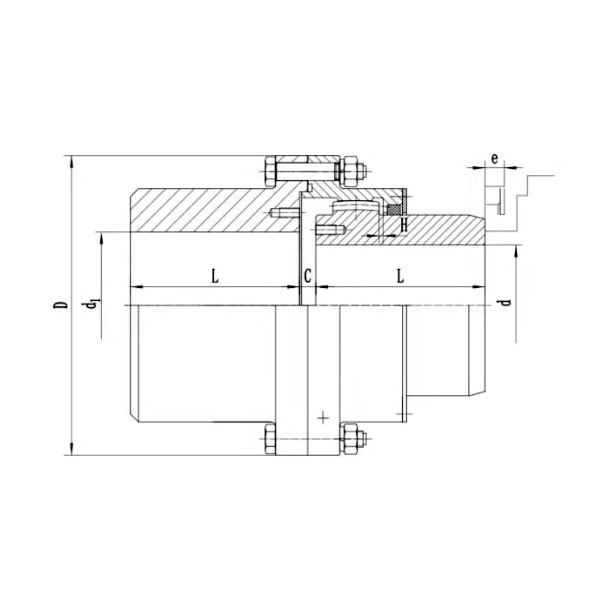
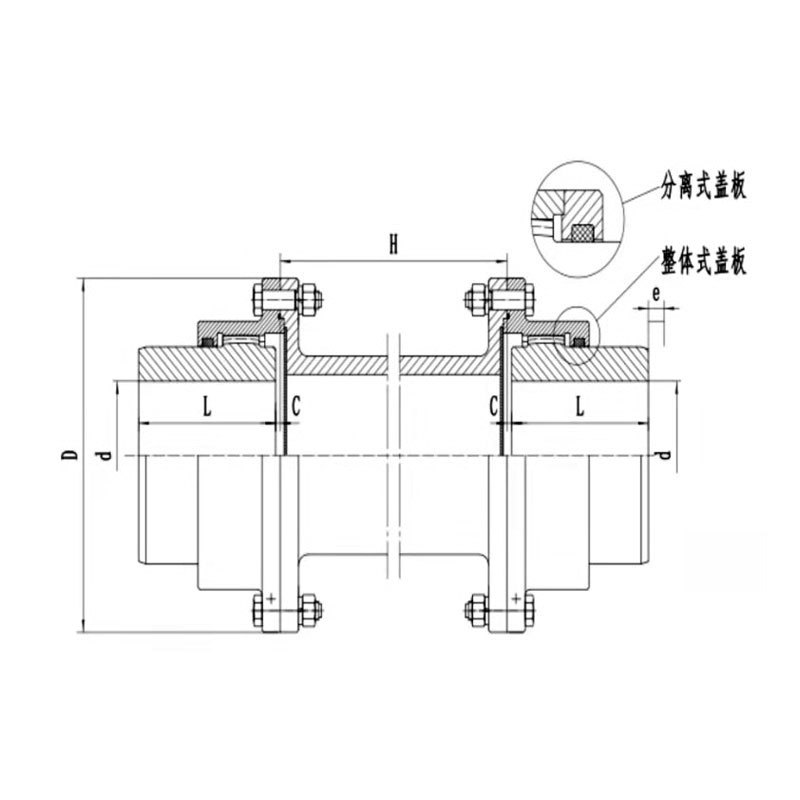
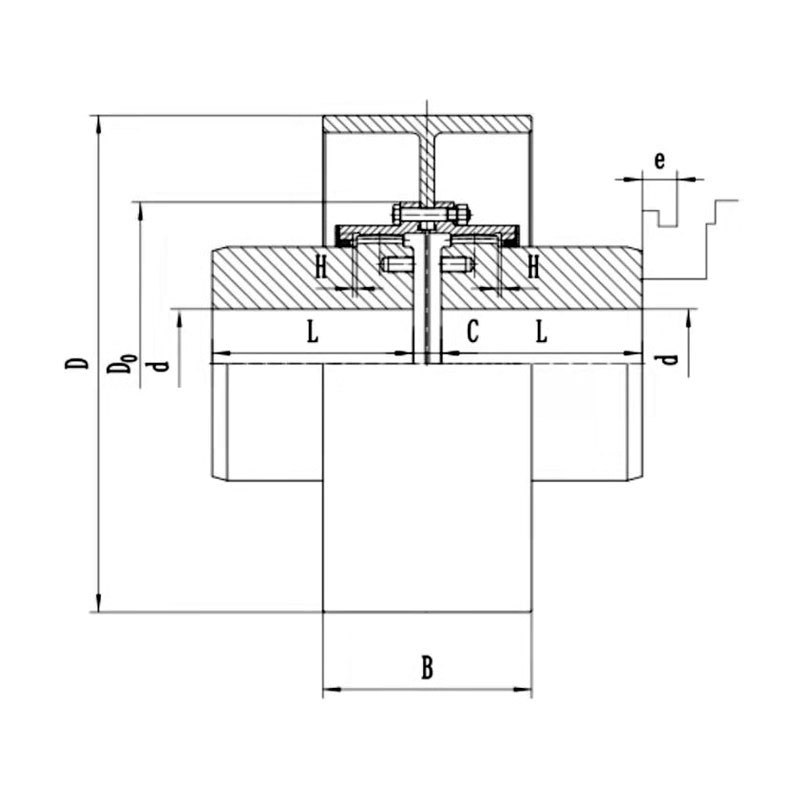
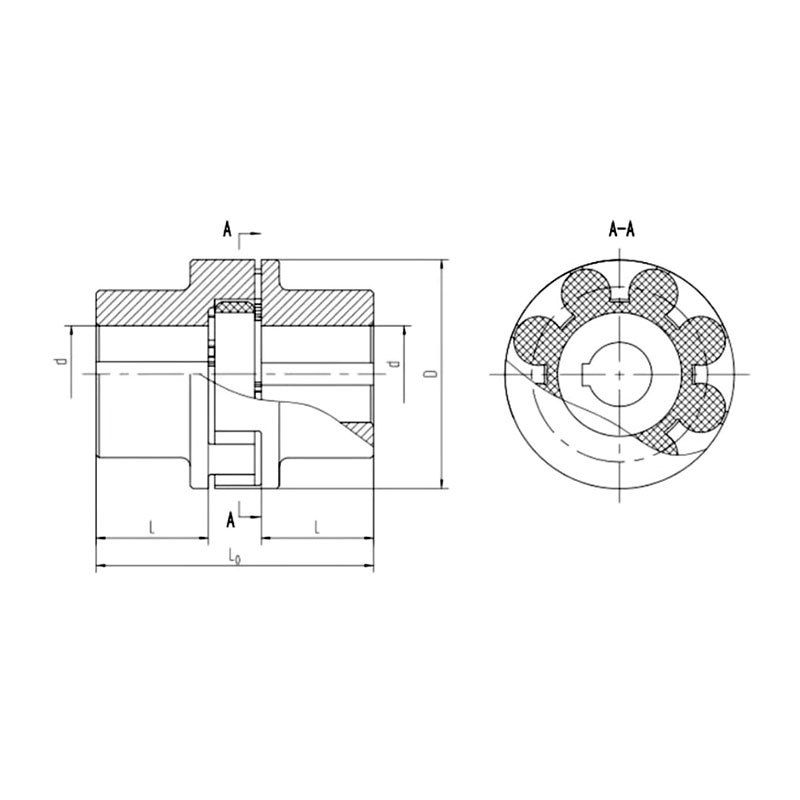
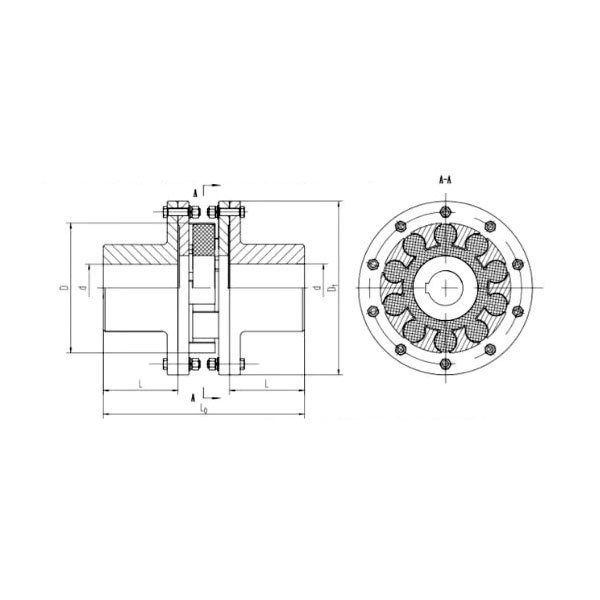
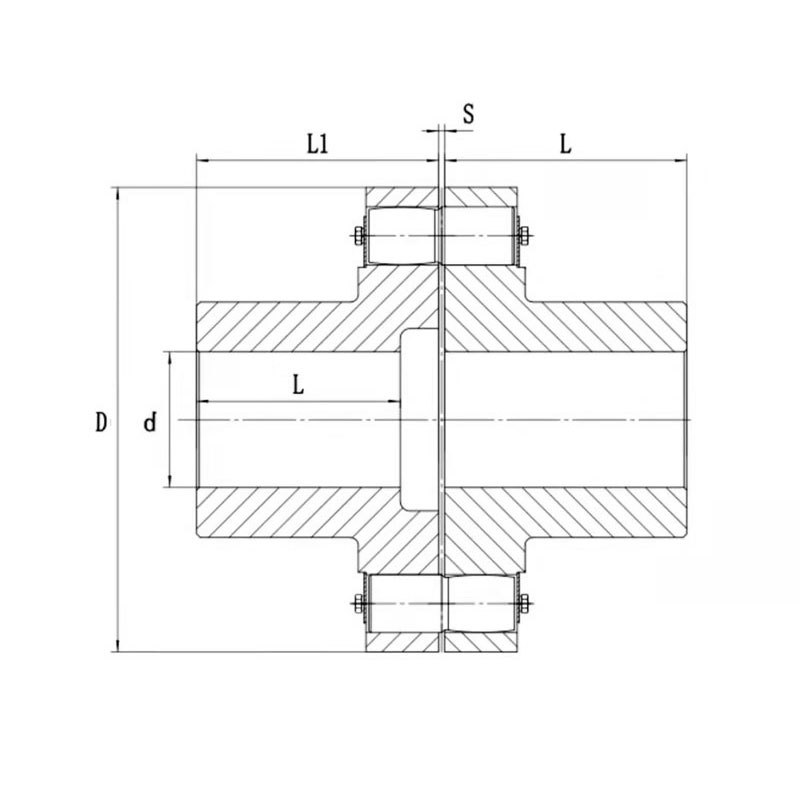
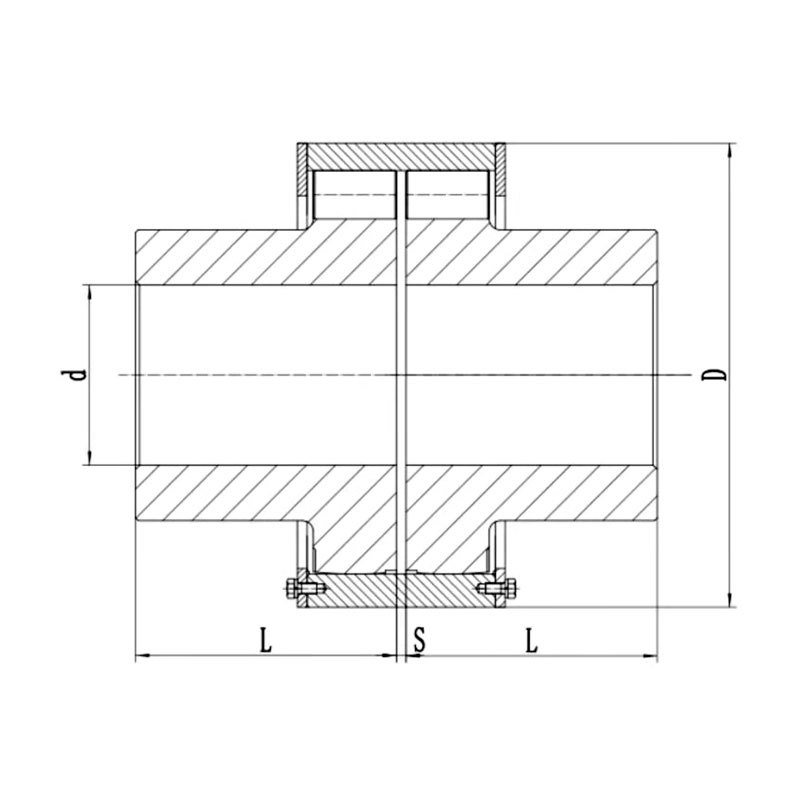
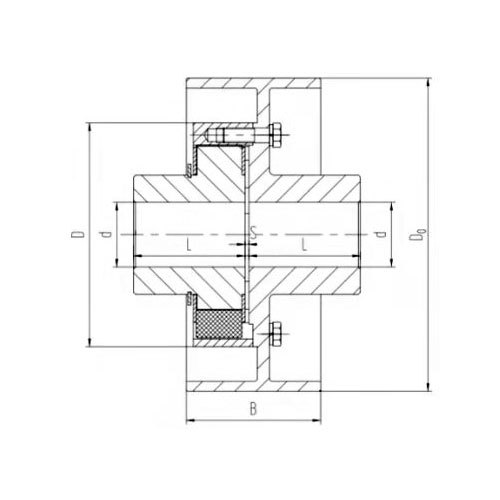
The WB-type rubber block coupling is primarily used in applications involving high torque, severe shock loads, or reversible machinery, and it features a relatively small angular deformation (1° to 2°). Its structural designs are shown in Figures 5.1 and 5.2, while technical parameters and key dimensions are listed in Table 5-1.


CB and WB format options
If the torque analysis of the shaft has already been performed, select C, B, or WB based on the results; if the torque analysis of the shaft has not been done, follow the principles below:
a) For diesel engine-driven systems, please contact Schenck Engineering Department.
b) Motor-driven operation: If direct drive is used without gears and any vibration or shock originates from the motor side, WB should be employed; CB-type options are also acceptable when more suitable.
c) Gearbox: If the vibration or shock originates from the driven side, a WB-type is typically used; otherwise, a CB-type is recommended.
d) Speed Increaser: Use the WB type if the impact and vibration originate from the high-speed end; otherwise, use the CB type.


Keywords

Online Consultation


Contact us today for a free expert consultation!

%{tishi_zhanwei}%

Related Products


Diaphragm Disc Coupling

The diaphragm disc coupling is a type of metal flexible coupling that offers compensation capabilities for radial, axial, and angular misalignments. Compared to conventional diaphragm couplings, it features a compact design, inherent strong corrosion resistance from the diaphragm disc itself, high load-bearing capacity, lightweight construction, and suitability for higher operating speeds.

T-Type and D-Type Diaphragm Couplings

The diaphragm coupling uses the elastic deformation of its diaphragm to compensate for the relative displacement between the two shafts it connects, making it a high-performance, flexible coupling with robust metal components.

F-type diaphragm coupling

The F-type structure combines the advantages of the R-type and G-type. For the same specifications, the F-type has a larger shaft diameter capacity than the R-type and a smaller outer diameter than the G-type.

G-Type Diaphragm Coupling

In addition to the key advantages of R-type couplings, the G-type half-coupling offers greater shaft-diameter capacity and can be manufactured with either straight bores, tapered bores (for hydraulic assembly and disassembly), or easy-to-connect flanged hubs. The G-type is particularly well-suited for large electric motors, generators, or steam turbine units. Moreover, G-type couplings are among the most convenient to assemble and disassemble of all coupling types.

R-Type Diaphragm Coupling

The R-type structure ensures that the center of gravity is positioned as close as possible to the support bearings on both sides of the unit, minimizing additional bending moments at the rotor shaft end—thus promoting smooth, high-speed operation. The flexible components (including the half-coupling, diaphragm assembly, and protective sleeve) are pre-assembled as a complete unit before leaving the factory and are connected to the intermediate section via a precisely aligned stop feature, allowing for easy overall assembly and disassembly. Importantly, this design maintains permanent alignment and dynamic balance even after multiple reassemblies. Additionally, the large distance between the two flexible elements (diaphragms) enables the coupling to effectively accommodate misalignment between the units. The intermediate section, designed with sufficient length, can be easily removed from the shaft, enabling convenient disassembly of the half-coupling without requiring any movement of the entire机组—this also applies during installation. Finally, shims at both ends of the intermediate section can be added or removed to compensate for installation inaccuracies, while simultaneously facilitating precise pre-tensioning to absorb thermal expansion or other types of dynamic misalignment in the system.

NUP New Elastic Sleeve Pin Coupling
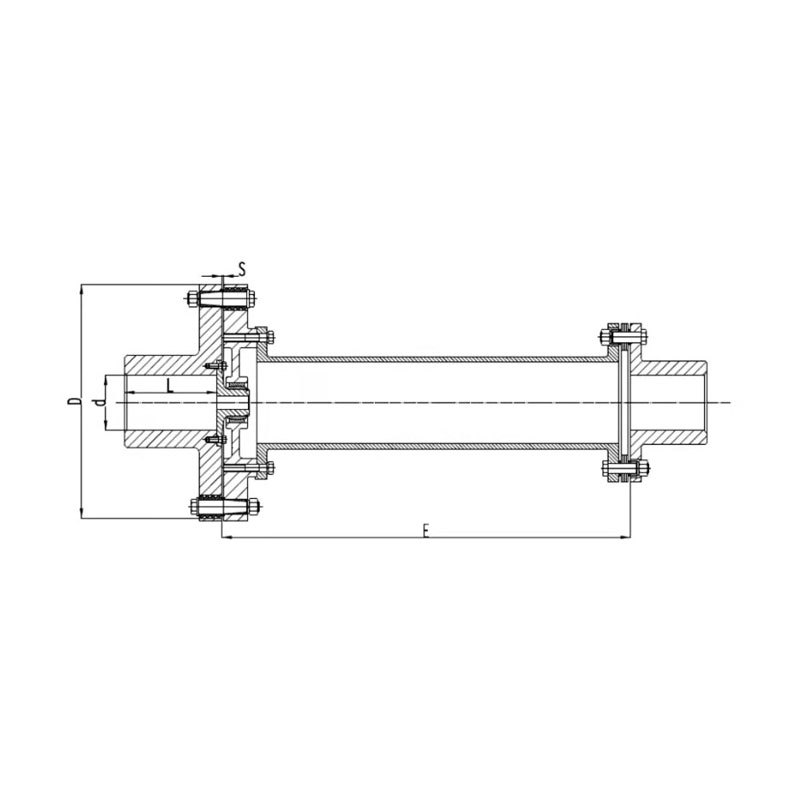
The NUP flexible coupling features a material made from polyurethane combined with graphite, offering excellent toughness, self-lubrication, and wear resistance. Its hollow-grid design provides three elasticity options, enhancing vibration absorption and impact resistance. Equipped with tapered-bolt connections, the coupling ensures a secure, non-loosening fit. Thanks to its exceptional safety and reliability, along with superior vibration-damping and shock-absorbing capabilities, this coupling has earned unanimous praise from over 100 users. As a result, it has received innovation funding awards from China’s Ministry of Science and Technology, the Provincial Department of Science and Technology, and the Municipal Science and Technology Commission.

NUPEX Composite Flexible Coupling

The NUPEX combination flexible coupling is a high-performance coupling developed and successfully launched onto the market in 2000 by Schenck Power, specifically tailored to meet the characteristics of variable-frequency drive units. After successful implementation at the Jinxi Petrochemical Plant, it has since been installed in over 300 units worldwide, all operating smoothly and delivering outstanding performance.

GCLD Type Drum-Type Gear Coupling

The drum-type gear coupling is a type of rigid-flexible coupling that offers compensation capabilities for radial, axial, and angular misalignment. Compared to straight-tooth couplings, it boasts advantages such as a compact design, small rotational radius, high load-carrying capacity, superior transmission efficiency, low noise levels, and extended maintenance intervals.

GIICL Type Drum-Type Gear Coupling

The drum-type gear coupling is a type of rigid-flexible coupling that offers compensation capabilities for radial, axial, and angular misalignment. Compared to straight-tooth couplings, it boasts advantages such as a compact design, small rotational radius, high load-carrying capacity, superior transmission efficiency, low noise levels, and extended maintenance intervals.

GIICLZ Type Drum-Type Gear Coupling

The drum-type gear coupling is a type of rigid-flexible coupling that offers compensation capabilities for radial, axial, and angular misalignment. Compared to straight-tooth couplings, it boasts advantages such as a compact design, small rotational radius, high load-carrying capacity, superior transmission efficiency, low noise levels, and extended maintenance intervals.

WGT Type Drum-Geared Coupling

The drum-type gear coupling is a type of rigid-flexible coupling that offers compensation capabilities for radial, axial, and angular misalignment. Compared to straight-tooth couplings, it boasts advantages such as a compact design, small rotational radius, high load-carrying capacity, superior transmission efficiency, low noise levels, and extended maintenance intervals.

NGCL Type Drum-Geared Coupling

The drum-type gear coupling is a type of rigid-flexible coupling that offers compensation capabilities for radial, axial, and angular misalignment. Compared to straight-tooth couplings, it boasts advantages such as a compact design, small rotational radius, high load-carrying capacity, superior transmission efficiency, low noise levels, and extended maintenance intervals.

Shaft misalignment compensation capacity of drum-type gear couplings

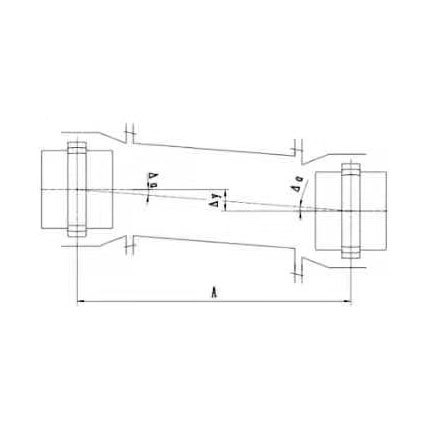
1) When there is no radial displacement between the two shafts, the permissible radial misalignment △α is as follows: For each pair of internal and external gear teeth engaged in a drum-type gear coupling, the allowable angular misalignment △α is 1°30'.

Wb-Type Rubber Block Coupling

The elastomeric coupling can transmit high torque and absorb rotational shocks in the unit, requires no lubrication, is easy to install and disassemble, and performs reliably even in harsh conditions such as humidity, sand, high temperatures, and other challenging environments—while demanding minimal maintenance and helping extend the lifespan of the equipment.

Cb-Type Rubber Block Coupling

The elastomeric coupling can transmit high torque and absorb rotational shocks in the unit, requires no lubrication, is easy to install and disassemble, and performs reliably even in harsh conditions such as humidity, sand, high temperatures, and other challenging environments—while demanding minimal maintenance and helping extend the lifespan of the equipment.

LM-type Plum Blossom-Type Elastic Coupling

The plum-shaped flexible coupling consists of two identical semi-couplings with claw-shaped protrusions, along with an elastic element. The plum-shaped elastic component is positioned between the claws of the two semi-couplings, enabling the connection between them.

LMS-Type Plum-Blossom Elastic Coupling

The plum-shaped flexible coupling consists of two identical semi-couplings with claw-shaped protrusions, along with an elastic element. The plum-shaped elastic component is positioned between the claws of the two semi-couplings, enabling the connection between them.

Lx Elastic Pin Coupling

The Lx elastomeric pin coupling uses several non-metallic, elastic pins arranged within the flange holes of the two coupling halves, connecting them via these pins. This type of coupling features a simple design, is easy to manufacture, and allows for convenient assembly, disassembly, and replacement of the elastic elements—without requiring the two coupling halves to be moved.

LZ-Type Elastic Pin-tooth Coupling

The flexible pin-type gear coupling uses several non-metallic pins fitted into aligned holes between the two half-couplings and the inner surface of the outer ring; torque is transmitted via these pins, thereby connecting the two half-couplings.

LZZ Type Elastic Pin Gear Coupling with Brake Wheel

The flexible pin-type gear coupling uses several non-metallic pins fitted into aligned holes between the two half-couplings and the inner surface of the outer ring; torque is transmitted via these pins, thereby connecting the two half-couplings.